What Is a Laser Projector? What You Need to Know
A laser projector swaps the lamp for a laser light source. See what that means in what is a laser projector terms. Updated October 2026.
 By Daniel Whitaker
Updated

A lamp that fades after a few thousand hours and costs money to replace is one of the oldest complaints about home projectors. Laser models were built to answer that problem, and shops now label everything from living room 4K units to classroom workhorses with the word laser. That makes it worth knowing what the label does and doesn’t promise.
So what is a laser projector? It’s a projector that uses a laser light source instead of a traditional bulb to light the image chip, which changes how long the light source is rated to last and how the brightness is delivered. The label doesn’t tell you about resolution, contrast, or whether the unit suits a bright room, though. Whether you’re shopping for a living room, a classroom, or a meeting space, this guide explains the technology in plain language, uses the listings to show how different laser designs are described, and separates real projectors from laser decor lights, based on published specifications rather than hands-on testing.
| Award | Product | Best Projector Reviews Score About Best Projector Reviews ScoreBest Projector Reviews Score is a comparison aid based on available product information, not a hands-on testing result. Read our review methods. | |
|---|---|---|---|
| Best Overall |
 XGIMI HORIZON 20 4K RGB Triple Laser Home |
9.2/10 | Buy |
| Best Budget |
 Laser Christmas Projector Lights Outdoor |
9.1/10 | Buy |
 Dangbei DBOX02 Laser Projector 4K GTV |
9.1/10 | Buy | |
| Best Value |
 ViewSonic LS740HD 1080P Laser Projector |
8.4/10 | Buy |
 Valerion VisionMaster Pro 4K Laser Projector(2026) |
8.3/10 | Buy | |
| Best Premium |
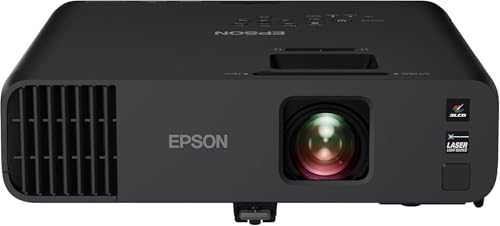 Epson Pro EX11000 3-Chip 3LCD Full HD 1080p |
8.3/10 | Buy |
 Nebula X1 4K Laser Projector, 3,500 ANSI Lumens |
8.3/10 | Buy | |
|
ViewSonic LS740W WXGA Laser Projector
|
8.1/10 | Buy | |
 AIRIVO Outdoor Laser Lights Projector |
7.8/10 | Buy |
Laser Projectors Explained: What Changes and What Doesn’t
The direct answer: a laser projector uses laser diodes, often paired with a phosphor or color combination, as its light source, and it still needs a display chip or panel to form the picture. The laser replaces the lamp, not the imaging system, so resolution, contrast, lens quality, and throw distance still decide how the image looks. The sections below follow the questions most shoppers ask next, starting with how the light source works. Every figure comes from the listings.
What “Laser” Actually Refers To
Every projector has a light source and an imaging device. In a lamp projector, a bulb makes white light that passes through a color wheel or color filters and the image chip. In a laser projector, laser light (or laser light converted by a phosphor) does that job.
The imaging side can be DLP, 3LCD, or another type. The supplied Epson Pro EX11000 is a 3LCD laser model, so it combines a laser light source with three LCD chips. Knowing that separation helps, because a “laser” label alone says nothing about sharpness or color.
Laser Designs Described in the Supplied Listings
The XGIMI HORIZON 20 is described with an RGB triple laser engine, which uses red, green, and blue lasers directly. The listing credits it with 3200 ISO lumens and a 100,000:1 contrast ratio. Those are manufacturer claims, and contrast figures depend on how the maker measures them.
The Dangbei DBOX02 is described with ALPD, short for Advanced Laser Phosphor Display, which uses a laser to excite a phosphor. The listing claims ALPD reduces the speckle effect common in traditional laser projectors, and rates the unit at 2450 ISO lumens. The ViewSonic LS740HD also mentions a laser phosphor light source.
The Epson Pro EX11000 uses a laser light source with 3LCD chips and is rated by the listing at 4,600 lumens. The listing calls its 20,000 hour light source virtually maintenance free, with no bulbs to replace. That is a manufacturer description, not a measured result.
Why Buyers Choose Laser: Rated Life and Fewer Lamp Swaps
A lamp slowly loses brightness and eventually needs replacing, which adds a running cost and some downtime. Laser light sources are rated for far more hours, and the listings show examples. ViewSonic states up to 30,000 hours in Dynamic Eco mode for the LS740HD, and Epson states 20,000 hours for the EX11000.
Those numbers are ratings, and they depend on the mode and conditions. Brightness can still decline gradually over a long period, and a laser projector can have other parts that wear out, such as fans and the chips. Treat the hours as a way to compare designs, not as a promise.
The other upside is simpler ownership. With no bulb to replace, routine care is mostly dust control and clear ventilation. Check the warranty terms, because a long rated life matters little if coverage is short; the XGIMI listing mentions a 2-year warranty.
Reading Brightness Numbers Without Getting Fooled
The laser listings use several labels: ISO lumens for XGIMI, Dangbei, and Valerion, and ANSI lumens for the ViewSonic LS740HD (5,500) and Nebula X1 (3,500). The Epson lists color and white brightness. The labels refer to different measurement methods, so compare like with like when you can.
Higher brightness helps when the room has lights on or windows, and it matters for large screens, because the same light spread over a bigger area looks dimmer. A very bright projector in a fully dark room can look harsh, so many people use a lower brightness mode. For a bedroom or basement, a moderate rating is often enough.
Business and education projectors, such as the ViewSonic and Epson models here, aim for high brightness in lit rooms. Home theater models, such as the XGIMI, Valerion, and Nebula, aim for color and contrast in a dim room. Picking the wrong class is a common mistake. A theater model in a bright classroom looks washed out, and a business model in a dark theater may lack depth.
Resolution: Sorting 4K Claims From Native Chips
Several listings describe 4K output. The Nebula X1 listing states 4K clarity across a 300 inch screen. The XGIMI, Dangbei, and Valerion listings also describe 4K. The Valerion listing adds AI Super Resolution for sharper detail, which hints at processing on top of the source.
None of the text clearly states whether each model’s imaging chip is native 4K or uses pixel shifting. So don’t assume. Check the full specification sheet for the chip resolution before buying if that matters to you. In contrast, the ViewSonic LS740HD and Epson EX11000 are listed at 1080p, and the LS740W title says WXGA 1280 by 800.
Resolution matters most on large screens and at close seating distances. A 1080p picture on a 100 inch screen can look good from a normal couch distance, while a 4K chip shows more benefit on larger images. Sit closer than the recommended distance and you will see more pixel structure. Sit farther and the difference between resolutions shrinks.
Contrast, HDR, and Black Levels
Many home theater models pair a laser source with HDR support. The XGIMI listing mentions Dolby Vision, HDR10+, and IMAX Enhanced, and the Valerion listing mentions HDR10+ and a wide color gamut claim. The Nebula X1 listing mentions Dolby Vision.
Contrast numbers vary widely: 15,000:1 for the Valerion, 100,000:1 for the XGIMI, and 5,000:1 native contrast rising to 56,000:1 with processing for the Nebula. Dynamic contrast figures use scene-by-scene adjustment, so they aren’t comparable with native contrast. A listing that states a native figure is giving you more useful information.
Even the best contrast numbers depend on the room. Light-colored walls and ambient light lift the black level and flatten the picture, no matter how good the projector is. A dark, matte wall around the screen helps. Dark paint is a cheap upgrade for any projector.
Throw Distance, Zoom, and Lens Shift
A laser projector still needs to fit your room. The ViewSonic LS740HD lists a throw ratio of 1.13 to 1.47 with a 1.3x optical zoom and an image from 30 to 300 inches. The Valerion lists a 0.9 to 1.5 range with auto focus and keystone correction, and the XGIMI mentions lens shift and optical zoom.
Lens shift moves the image up or down without tilting the projector, which avoids the distortion that keystone correction can introduce. Keystone is a software fix and can slightly soften the picture, so use it lightly. Measure the room before you buy and compare the throw ratio with your screen size.
Gaming and Streaming Features
Some laser projectors target gaming. The XGIMI listing claims 1ms response and 240Hz with VRR and ALLM, and the Valerion lists 240Hz and 4ms. These are manufacturer figures and the conditions behind them aren’t given. If you game, check which resolution and refresh rate combination the specs actually support.
The XGIMI, Dangbei, and Nebula listings mention Google TV, and the Valerion mentions an AI smart operating system. Built-in streaming saves a separate stick, though licensed app availability can differ by model, so confirm the apps you use. If an app you rely on is missing, an HDMI streaming stick is an easy workaround. Check the input lag claims too if you plan to play fast games.
Laser Decor Lights Are Not Laser Projectors
Some supplied items are outdoor laser light decorations, namely the VanSmaGo Laser Christmas Projector Lights and the AIRIVO Outdoor Laser Lights Projector. They project moving dots, firefly effects, or snowflake patterns on trees and walls, and one lists IP65 water resistance. They can’t show movies, slides, or a computer screen.
They share the word laser and the safety concerns, but they aren’t the same kind of product. Don’t buy one expecting a picture, and don’t aim any laser device at people, animals, aircraft, or into windows. Follow the manufacturer’s outdoor placement and power guidance, and keep cords and connectors out of standing water.
One more flag: the ViewSonic LS740W listing is titled as a 5,500 lumen WXGA laser projector, but its feature text describes a 22 inch touchscreen monitor. The two parts of that listing don’t match, so verify the product details with the seller before relying on it. A mismatch like this is a good reason to read the full specifications before buying any item.
Speckle, Color, and Screen Choice
Laser light is very pure, and on some surfaces it can create a faint grainy shimmer called speckle. Makers use different methods to reduce it, and the Dangbei listing says its ALPD design avoids the speckle effect, which remains a manufacturer claim. A smooth, matte screen or wall usually helps, and a screen with a rough texture can make it more visible.
Screen choice matters for brightness too. A gain screen or an ambient-light-rejecting screen can improve contrast in a lit room, but each has tradeoffs for viewing angle and color. Match the screen to your room and the projector’s throw distance. A plain white wall is fine to start with.
Where the Supplied Projectors Fit
For a dim living room with streaming and movies, the XGIMI, Dangbei, Valerion, and Nebula listings describe 4K-class smart projectors with Google TV or an AI operating system. For lit classrooms, auditoriums, and offices, the ViewSonic LS740HD and the Epson Pro EX11000 stress high lumens and 1080p. For golf simulation, the ViewSonic listing names a Golf mode.
This isn’t a ranking. Each listing reflects a different priority, from color and contrast to brightness and installation flexibility. Choose the one whose stated strengths match the way you will use it.
Safety Basics for Laser Projectors
Never look into the lens of a running projector, especially a high-brightness laser unit. Keep children and pets away from the beam path, and don’t let anyone stand in front of the lens during setup. Follow the manufacturer’s safety information and any warning labels.
Leave the vents clear and don’t enclose the projector. Use the mounting hardware the manufacturer specifies, and ask a qualified installer for ceiling work. Don’t open the housing, because laser and electrical parts need professional service.
Deciding Whether a Laser Projector Fits Your Room
Choose laser if you want long rated light-source life and little routine upkeep, and if you watch often enough to benefit. A lamp model can be cheaper to buy, though lamp swaps add to the cost over time. For a lit meeting room, look at the high-lumen business models. For a dark theater, focus on contrast, native resolution, and throw distance. The word laser is only the starting point.
About the author
I care more about how a projector handles a dark scene than about any single number on a spec sheet. My beat here is home theater: contrast, black levels, HDR handling, and how the same picture holds up in a dedicated room versus a living room. I write the way I shop. I compare spec sheets, read what owners complain about most, and point out the trade-offs before the highlights. If a feature only looks good on paper, I will say so. My notes follow the site's review methods: research-based comparison, not lab testing.