How Much for a Projector Screen? What Drives the Price
how much for a projector screen? Cost depends on size, material, frame, and use. Here's what shapes the price tier, with notes for October 2026.
 By Priya Raman
Updated

Screen shopping gets confusing quickly in any season, because two screens with the same diagonal can sit in very different price tiers. A simple folding fabric panel, a freestanding frame with weights, and a large outdoor model all promise a big picture, yet they cost different amounts for different reasons. Anyone asking how much for a projector screen is really asking what each tier gives up or adds, and whether those extras matter in their own room.
There isn’t one number that answers the question, and this guide doesn’t quote one. Prices move constantly, so the useful approach is to understand the features that push a screen into a higher or lower tier. The notes below come from published specifications and the product listings, not hands-on trials, so you can decide where to spend and where to save before you click buy. A few minutes spent measuring your wall and checking your projector’s throw type can prevent a second purchase later.
| Award | Product | Best Projector Reviews Score About Best Projector Reviews ScoreBest Projector Reviews Score is a comparison aid based on available product information, not a hands-on testing result. Read our review methods. | |
|---|---|---|---|
| Best Overall |
 Mdbebbron 100 inch Projector Screen 16:9 Foldable |
9.2/10 | Buy |
| Best Value |
 150inch Outdoor Projector Screen Anti Crease |
9.2/10 | Buy |
| Best Budget |
 Mdbebbron 120 inch Projector Screen 16:9 Foldable |
8.3/10 | Buy |
| Best Premium |
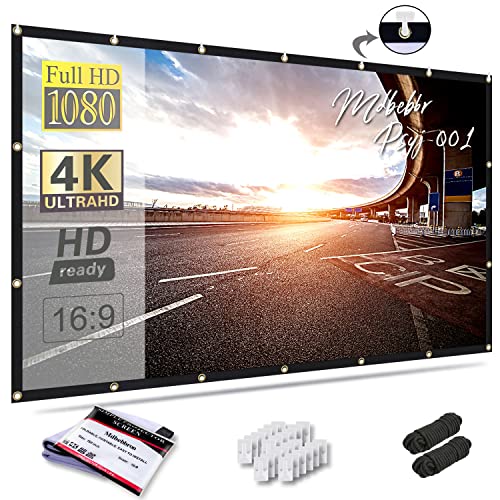 Mdbebbron 150 inch Projection Screen 16:9 Foldable |
8.1/10 | Buy |
 120inch Projector Screen with Stand |
8.0/10 | Buy |
What Determines the Cost of a Projector Screen
The price of a projector screen mostly comes down to size, the type of surface, and whether the screen includes a frame or stand. A larger diagonal costs more because it needs more material, and a screen with its own structure usually costs more than one you hang yourself. Rather than chase a number, it’s more useful to know which of these features your room actually needs.
Screen size is the first price lever
Diagonal size drives cost more than almost anything else. The options include 100 inch, 120 inch, and 150 inch diagonals, all in a 16:9 aspect ratio. The listings give viewing areas of 87 by 49 inches for the 100 inch size, 104 by 58 inches for 120 inch, and 130 by 73 inches for the 150 inch Mdbebbron screen.
Bigger isn’t automatically better, and a larger screen doesn’t just cost more. A projector’s light is spread across a larger area, so the image looks dimmer and may show more of the room’s light. If you’re unsure, size the screen to the projector’s rated brightness and your seating distance and not to the largest option available.
You also pay for space. A 150 inch screen needs a wall or frame to match, and the listing for the 150inch Outdoor Projector Screen Anti Crease gives a 132 by 73 inch viewing area, so measure your wall first. A screen that doesn’t fit your space is expensive at any tier.
Fabric folding screens sit in the lower-cost tier
Foldable fabric screens are generally the most affordable way to get a large picture. The Mdbebbron 100 inch Projector Screen 16:9 Foldable is described as polyester, with a stated 160-degree viewing angle and double-sided projection support. You hang it with hooks, ropes, brackets, nails, or double-sided tape, so there’s no frame to buy.
That lower cost comes with trade-offs. A fabric panel hangs from its edges, so it can ripple if the tension isn’t even. The listing describes the material as anti-crease and washable, but you’ll still want to hang it carefully and keep it flat.
For renters and travelers, this tier makes sense. The listings say the screens fold small enough for a backpack or suitcase, and they can go on a wall without a frame. If you only watch occasionally, there’s little reason to pay for more.
Stands and frames add cost, and add stability
Once a screen comes with a stand, the cost rises with the structure. The 120inch Projector Screen with Stand lists an extended, reinforced base, steel accessories, and a windproof kit with ground stakes, ropes, and sandbags. You’re paying for the hardware that holds the screen upright, which a hung fabric screen doesn’t need.
A freestanding frame has real advantages. It doesn’t need drilling, it can move between rooms, and it suits backyards where there’s no wall at all. The listing also describes a carry bag, so it’s intended to be taken apart and stored.
The downside is setup time and storage space. A frame has more parts to assemble, and in wind it must be anchored using the included stakes and weights. Never leave a freestanding screen unattended in gusty weather.
Moving up a size within the same fabric line
The Mdbebbron range shows how size alone changes the tier. The same foldable design is listed at 100, 120, and 150 inch diagonals, with the Mdbebbron 120 inch Projector Screen 16:9 Foldable and the Mdbebbron 150 inch Projection Screen 16:9 Foldable as the larger steps. Each listing repeats the same feature set, including anti-crease polyester, washable care, and front and rear projection.
Because the features match, the extra cost of a larger one is mostly extra fabric. That makes the decision simple: pay for size only if your room and projector can use it. A 150 inch panel needs a wide wall and a projector bright enough to fill it.
Wall space is the practical limit. The 150 inch listing gives a 130 by 73 inch viewing area, which is wider than many walls between a doorway and a corner. Measure the width and the height before ordering, including space for the screen’s edges.
Care, washing, and how long a screen lasts
Maintenance costs are small for fabric screens, but they exist. The Mdbebbron listings say the material can be hand washed, machine washed, or spot cleaned and then air dried. That helps if the screen picks up dust or a mark, and it means you don’t have to replace it for a stain.
A stated care method is helpful, but lifespan isn’t specified in any of the listings. Nothing here supports a claim that one screen lasts longer than another. If long-term durability matters, look at the construction and the seller’s return and warranty terms.
Frames are different. The stand listing mentions steel pipes and a reinforced base, which are meant to resist bending. Even so, repeated assembly and outdoor exposure wear on any frame, so store it dry and inspect joints before each use.
Surface material and gain move the price tier too
Material is the next factor. The listings describe polyester fabric, soft-touch white material, and milk silk fabric, each with its own claims about color and brightness. Manufacturer wording such as brighter colors or high color reproduction describes intent and isn’t a measured result.
Higher-end screens in general use specialized surfaces with specific gain figures, ambient-light-rejecting coatings, or tensioned frames. None of the listings give gain figures, so this guide doesn’t compare them. If you plan to watch in a bright room, ask the seller for those details, since that’s where a higher tier may actually pay off.
For a dim room with a decent projector, a plain white matte surface is often enough. Spending more on a specialized surface makes the most sense when ambient light is high or when you want the best contrast from a good projector. Otherwise, the money is better spent on the right size.
Hidden costs people forget
The screen’s price isn’t the whole bill. Hanging a fabric screen might need hooks, brackets, or tape. A stand screen might need extra weights for outdoor use even when stakes are included.
Projector compatibility can add cost as well. Some screens are designed for standard throw projectors and not short-throw models, so a mismatch could force a second purchase. Always check the screen’s compatibility note against your projector’s throw ratio.
Mounting hardware is another expense for permanent installs. If you hang a screen from a ceiling or a wall mount, use hardware rated for the screen’s weight, and consider a qualified installer for ceiling work. Following the manufacturer’s guidance matters more than saving a few dollars on brackets.
Front and rear projection capability
Several of these listings mention support for front and rear projection. Rear projection lets you place the projector behind the screen, which hides the equipment and keeps people from walking through the beam. It requires space behind the screen and a surface that supports it.
If you’ll only ever project from the front, you might not need to pay for that feature. If you want to hide the projector in a backyard or on a stage, it can be worth a higher tier. Confirm the listing states the capability, and don’t assume it.
Viewing angle is related. The listings state 160 degrees for several screens, which suggests the picture stays visible from the sides. That’s a manufacturer claim, so a wide room still deserves a careful look at seating positions.
Viewing distance, seating, and what size actually suits the room
Seating distance should guide the diagonal you buy. Sit too close to a very large screen and your eyes have to move constantly to follow the action. Sit too far from a small one and the picture feels lost. Some screen makers state an ideal viewing distance, and that figure is a useful starting point when a listing provides one.
Resolution matters here too. Several listings mention 1080p or 4K support, but a screen surface doesn’t add pixels. The projector sets the detail, and the screen simply needs to be smooth and neutral enough not to get in the way.
Room shape also plays a role. A long, narrow room favors a screen on the short wall with seating farther back, while a wide room may need a bigger screen so people at the sides still see well. Think through these details before settling on a size, since they decide whether the extra cost buys anything useful.
Choosing a tier without overspending
Start with the use case. For occasional movie nights in a dim room, a lower-tier foldable fabric screen is likely enough, and you can test whether a screen helps before investing more. For frequent outdoor use, the stand or inflatable tier covers the practical need for something that stands on its own.
Then match the size to your projector and room. A screen larger than the projector can illuminate well will look disappointing no matter how much it cost. Measure the wall, confirm the throw type, and compare the viewing area figures in each listing.
Finally, think about how long you’ll keep it. A screen you’ll set up once and leave in place deserves a better surface and sturdier mounting. One you’ll carry to a campsite should be light, easy to pack, and tolerant of repeated folding, so the lower tiers fit that purpose well.
About the author
A good screen can change a picture more than a small projector upgrade, and it is the part many buyers skip. I write about screen materials, gain, ambient light rejecting designs, and how room lighting, wall color, and seating position change what you see. I try to keep the advice grounded in what a normal room looks like, not an ideal one. My notes follow the site's review methods: research-based comparison, not lab testing.