
Best Premium Home Theater Projectors With Frame Interpolation of 2026
Best premium home theater projectors with frame interpolation for smoother motion, flexible placement, and room-friendly image performance in November 2026.
 By Tom Reyes
Published

Room Fit, Motion, and Placement
A projector can have an impressive specification sheet and still miss the mark if its throw distance, brightness, or placement options don’t fit your room. A living room with ambient light may favor the listed 3,400 or 4,000 lumens from Epson models, while a light-controlled theater can make better use of advanced contrast, HDR, and color features. The supplied data also shows a major difference between native resolution and supported formats: several affordable models are native 1080p even when they accept 4K content, while the Epson Home Cinema LS11000 4K PRO-UHD Laser lists a full 8.29-million-pixel on-screen image. That distinction matters more than a 4K label alone when you’re planning a large screen.
Placement flexibility varies just as much. The antmap model lists 100% offset, electric focus, auto keystone correction, and a rotatable stand, while the Epson Home Cinema 1080 3-Chip 3LCD 1080p Home lists a picture skew sensor for automatic geometry correction. The LS11000 goes further with powered focus, zoom, motorized lens shift, and memory settings, making it the most installation-focused option in this group based on the supplied specifications. Buyers comparing the best premium home theater projectors with frame interpolation should also separate motion processing from brightness and contrast, since only selected models explicitly list frame interpolation. For broader screen and room planning, see this guide to home theater projector screens and the related 4K home theater projector options.
| Award | Product | Best Projector Reviews Score About Best Projector Reviews ScoreBest Projector Reviews Score is a comparison aid based on available product information, not a hands-on testing result. Read our review methods. | |
|---|---|---|---|
| Best Overall |
 Epson Home Cinema 1100 3-Chip 3LCD 1080p Home |
9.1/10 | Buy |
| Best Premium |
 Epson Home Cinema 1080 3-Chip 3LCD 1080p Home |
9.1/10 | Buy |
| Best Budget |
 [100% Offset &500 ANSI] 4K Support Projector |
8.9/10 | Buy |
| Best Value |
 Epson Home Cinema 980 3-Chip 3LCD 1080p Movie |
8.8/10 | Buy |
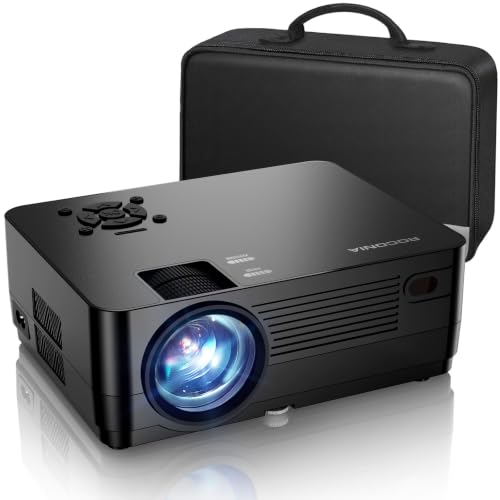 Projector with 5G WiFi and Bluetooth |
8.6/10 | Buy | |
 Epson Home Cinema LS11000 4K PRO-UHD Laser |
8.4/10 | Buy | |
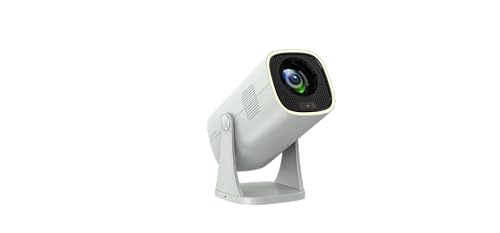 Philips, Neopix 244, Home Cinema Projector |
8.3/10 | Buy | |
 CEBORY Projector with WiFi and Bluetooth |
8.3/10 | Buy | |
 BenQ HT5550 True 4K UHD Home Theater Projector |
8.3/10 | Buy | |
 XENPONAD 4K Smart Projector with Google TV,Native |
8.1/10 | Buy |
FAQs
Which listed projector is better suited to a brighter living room?
The Epson Home Cinema 980 3-Chip 3LCD 1080p Movie lists 4,000 lumens of color brightness and 4,000 lumens of white brightness, with IDMS and ISO measurement references supplied. The Epson Home Cinema 1100 and Epson Home Cinema 1080 each list 3,400 lumens of color and white brightness. Ambient light, screen size, and screen characteristics still affect the image, so brightness alone doesn’t guarantee a strong daytime result.
Do these projectors all have native 4K resolution?
No. The antmap, Roconia, CEBORY, and XENPONAD descriptions identify native 1080p while listing 4K support, which means supported input and native display resolution aren’t the same. The Epson Home Cinema LS11000 lists 4K display technology and a full 8.29-million-pixel image, while the supplied BenQ details identify True 4K UHD.
Why does lens shift matter more than keystone correction for a fixed installation?
Lens shift moves the projected image optically, while keystone correction digitally adjusts its geometry. The LS11000 lists motorized horizontal and vertical lens shift, powered zoom, and focus, which may simplify a permanent ceiling or shelf installation. Auto keystone on models such as the antmap and XENPONAD can help with quick placement, but you should still follow the manufacturer’s alignment guidance.
Which models explicitly list frame interpolation?
The Epson Home Cinema LS11000 lists frame interpolation as part of its video processing, and the BenQ HT5550 product title explicitly includes frame interpolation for fluid picture. The other supplied product descriptions don’t provide enough information to confirm that feature. Motion appearance can also vary with the source, selected mode, and room setup.
Do I need a dedicated projector screen?
No, a compatible flat surface may work, but a projector screen can provide a more predictable viewing surface. The CEBORY package specifically lists a foldable 100-inch screen, while the other products don’t state that a screen is included. Screen gain, image size, ambient light, and viewing distance can all change perceived brightness and contrast. Buyers planning a full setup can also compare these models with the site’s home theater projector screen guide and theater projector recommendations.
About the author
I like gear that earns its place in a bag, so I look at portable projectors the same way: weight, battery claims, fan noise, and whether the picture is usable without a perfect room. I write for people who want movie night in a hotel room, a dorm, or a small apartment. Expect plain talk about what small projectors do well and where they cut corners. My notes follow the site's review methods: research-based comparison, not lab testing.