What Is a Dot Projector? Two Common Meanings
What Is A Dot Projector? Usually a face-scanning depth sensor, but DOT projector headlights share the name. Here's how to tell in October 2026.
 By Ben Carter
Updated

Type those words into a search box and you’ll land on two completely different worlds. One is the tiny sensor on the front of a phone that maps your face, and the other is a pair of truck headlights with “DOT approved projector lens” in the product title. Neither one is a movie projector, which is what many people first assume, so it’s worth sorting out before you spend time on the wrong thing.
The honest answer to what is a dot projector is that it depends on the context, and the two common meanings share almost nothing except the word. A dot projector in a face-recognition system sends out a pattern of invisible dots to measure depth, while DOT projector headlights are road lamps with a lens that focuses the beam. This guide explains both, uses the headlight listings as examples, and avoids guesses beyond what those listings and general definitions support.
| Award | Product | Best Projector Reviews Score About Best Projector Reviews ScoreBest Projector Reviews Score is a comparison aid based on available product information, not a hands-on testing result. Read our review methods. | |
|---|---|---|---|
| Best Overall |
 Partsam Full LED Chrome Headlights Assembly |
8.6/10 | Buy |
| Best Value |
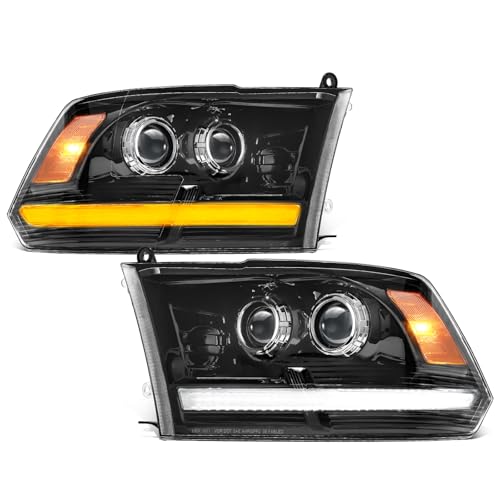 Partsam Full LED Headlights Assembly Compatible |
8.3/10 | Buy |
Dot Projector Meaning: Face Sensors and DOT Headlights
A dot projector is most often the component in a face-recognition system that casts a pattern of small infrared dots onto a face so a camera can measure its shape. It isn’t a display device, and it doesn’t produce a picture anyone watches. The same words also turn up in shopping listings for headlights, where DOT refers to a U.S. regulatory label and “projector” refers to the lens style.
The sections below take the sensor meaning first, then contrast it with a video projector, then move to the headlight meaning and the listings, and finish with a way to decide which one you actually need.
The Dot Projector in Face Recognition
Face-unlock systems on some phones and devices use a small emitter that shines a grid of infrared dots on the person in front of the screen. An infrared camera then reads how the dots land. Because a nose, cheek, and forehead sit at different distances, the pattern bends, and the system builds a depth map from that.
The point of using dots is depth. A plain photo can only show a flat face, but a pattern of dots can show shape. That’s why this kind of sensor is described as helping to tell a real face from a picture of one, though how well any given system does that depends on its design and software.
The light is infrared, so you can’t see it, and the sensor works without room lighting. Manufacturers design these units for close range and low power. Don’t open one up or aim anything at your eyes, and leave repairs to the maker or a qualified repair shop.
How a Dot Projector Differs from a Video Projector
A video projector creates a full picture from a signal and throws it on a wall or screen. It’s judged by lumens, native resolution, throw ratio, and contrast. A dot projector in a sensor does none of that, since its job is to cast a fixed pattern that a camera analyzes.
Specs that matter for a movie night mean nothing here. There’s no screen size, no keystone correction, and no lamp or filter to replace. If you came looking for something to watch films on, you want a home theater or portable projector instead, and a spec like ANSI lumens is the thing to compare.
The shared word comes from the basic idea of throwing light in a pattern. In one case the pattern is an image for you to watch, and in the other it’s a dot grid for a sensor to read. The device type, the specs, and the buying criteria differ completely.
What “DOT Projector” Means in Headlight Listings
In a headlight listing, DOT stands for the U.S. Department of Transportation, whose marking appears on lamps meant for road use. A projector-style headlight uses a lens that focuses light from the bulb into a beam, which is different from a simple reflector design that bounces light off a mirrored bowl. Many drivers like projector lenses because they tend to shape the beam more deliberately.
The Partsam listings use exactly that language. They describe a DOT approved dual projector lens, and they say the DOT code is engraved on the headlight. The listings also say the units are DOT and SAE approved and meet regulatory standards in the United States and Canada, so treat that as the seller’s statement and confirm the marking on the product when it arrives.
The beam pattern matters on a road. A cut-off line, a sharp edge at the top of the low beam, is meant to light the road without shining straight into oncoming drivers’ eyes. The listings describe the beam as focused with a flat top, which is how a projector low beam is normally described, and proper aiming still decides how it behaves on your vehicle.
What the Supplied Partsam Listings Say
The Partsam Full LED Chrome Headlights Assembly and the Partsam Full LED Headlights Assembly Compatible share nearly identical feature lists. Both are described as full LED projector headlights, sold as a left and right pair, with a switchback turn signal that shows a white daytime running light and switches to amber when signaling.
The listings state candela figures for the beams, 74,000 for the low beam and 118,000 for the high beam, and say the assembly includes the daytime running light, turn signal, position light, and side light. They also list a 6500K color and an IP67 rating. Candela measures light intensity in a given direction, and these are the manufacturer’s numbers with no test method given.
IP67 is an ingress protection rating for dust and temporary water immersion. The listings use it to say the assemblies are sealed, but a claim that a unit beats most competitors isn’t something the listing backs up with data, so leave it out of your decision. Look for the rating and the warranty terms, and give them more weight than the marketing comparisons.
Decoding Candela, Kelvin, and Switchback
Headlight listings use a different vocabulary from projector listings. Candela, the unit in the Partsam numbers, measures luminous intensity in a particular direction, so a high figure means a strong beam center and doesn’t tell you how well the light spreads across the road. Lumens, the unit video projectors use, measure total light output, and the two aren’t interchangeable.
The 6500K figure describes color temperature. Higher numbers look whiter and bluer, and lower numbers look warmer and yellower. A cooler color can look crisp but may feel harsher in rain or fog, which is a matter of taste and conditions and not something the listing measures.
Switchback refers to the turn signal behavior, where a white running light changes to amber when you signal. It’s a style and visibility feature. It doesn’t affect whether the headlight is legal, so the DOT marking and correct aiming still matter more.
Checking Fitment Before You Buy
Both listings state compatibility with specific vehicles: the 2009 to 2018 Ram 1500, the 2010 to 2018 Ram 2500 and 3500, and the 2019 to 2023 Ram 1500 Classic. Those year ranges come from the seller. Confirm your truck’s exact year, trim, and headlight connector against the listing and the seller’s fitment tool before ordering.
Trim and factory options can change what plugs in. Trucks may have had different headlight setups from the factory, so a year match alone may not settle it. If the listing doesn’t answer your question, ask the seller or check the owner’s manual.
The listings also recommend reading the instruction manual and say professional installation is recommended if you need help. They mention that the included instructions cover wiring and installation. Headlight work involves vehicle electrical systems, so if you aren’t comfortable with that, a qualified installer is the safer path. Don’t skip aiming the lights after installation, because a misaimed headlight can blind other drivers.
Why the Search Gets Confusing
The phrase mixes three ideas that rarely appear together: a sensor, a lamp, and a video device. Search engines return all three because the words match. That’s why a question about a dot projector can bring up a product page for truck headlights.
Brand and category pages add to the confusion. A listing for a headlight uses the word projector because of its lens, and one for a video unit uses it because of the picture. A listing for a sensor module may use dot projector in its parts list. Read the product description and category to see which one you’re looking at.
If you’re trying to understand a phone feature, the sensor meaning is the one you want. If you’re replacing vehicle lighting, the headlight meaning applies. If you want to watch movies on a wall, neither does, and you should search for a home theater or portable projector.
Safety Notes for Each Meaning
Infrared emitters in consumer devices are designed by their makers to be safe in normal use, but you shouldn’t take one apart or point a bright emitter at an eye. Repairs on face-sensor hardware are a job for the manufacturer or a qualified shop, since misalignment or damage can break the feature.
For headlights, follow the vehicle and product manuals. Use the right connectors, disconnect power as the manual instructs before working, and aim the beams after installing. A professional installation is a reasonable choice if you’re unsure.
Check local rules too. Lighting regulations vary, and a headlight that’s labeled for road use in one place may be treated differently in another. The seller’s DOT statement is a starting point, and the marking on the product is what an inspector would look for.
Which Meaning Fits Your Question
If you’re asking what a dot projector does in a phone or laptop, the answer is that it casts an invisible dot pattern so a camera can measure depth for face recognition. If you’re shopping for headlights, a DOT projector headlight is a road-use lamp with a focusing lens, and the listings describe full LED versions for certain Ram trucks. If you want a movie projector, you need a different kind of search.
Before buying anything, check the category, the fitment list, and the stated regulatory marking. A minute of reading can save a return, and with headlights it can keep the install from turning into a second trip to the shop.
About the author
I am the person friends ask whether a cheaper projector is good enough. My focus is budget picks and comparisons: where the savings are fine, where they hurt, and what to skip. I write buying guides that start with how you will use the projector and end with a short list, and I try to be upfront about the compromises at every price. My notes follow the site's review methods: research-based comparison, not lab testing.