How to Make a Projector With a Phone Explained
Learn how to make a projector with a phone using wired or wireless connections, adapters, and setup checks in November 2026.
 By Marcus Bell
Published

A phone can become a projector source, but it cannot project an image onto a wall by itself; you need a compatible projector, a matching connection, and a suitable viewing surface. The phrase how to make a projector with a phone usually means using the phone to send video, photos, or apps to a separate projector.
Some models accept a wired phone connection, while others use screen mirroring over Wi-Fi or provide built-in streaming apps. The right method depends on the phone type, the projector’s ports, the content source, and whether the setup is indoors or outdoors.
A wired connection can be a practical choice for a family movie night because it avoids wireless pairing, but it may require the correct phone adapter or cable. Wireless mirroring can reduce cable clutter, although both devices may need to use the same network and some protected streaming services may not mirror normally.
Projectors in the supplied options advertise different combinations of Type-C, HDMI, USB, Wi-Fi, Bluetooth, and built-in apps, so checking those details matters more than choosing a cable at random. If you are still deciding how a projector should connect to another source, this computer-to-projector connection guide explains a related setup.
| Award | Product | Best Projector Reviews Score About Best Projector Reviews ScoreBest Projector Reviews Score is a comparison aid based on available product information, not a hands-on testing result. Read our review methods. | |
|---|---|---|---|
| Best Overall |
 Native 1080P Mini Projector Bluetooth |
8.9/10 | Buy |
| Best Budget |
 Mini Projector 4K Support |
8.8/10 | Buy |
| Best Value |
 Mini Movie Projector with Wired Screen Mirroring |
8.6/10 | Buy |
 Mini Projector,1080P Support Portable Projector |
8.3/10 | Buy | |
 【Built-in APPS】Mini Projector With Wifi |
8.3/10 | Buy | |
| Best Premium |
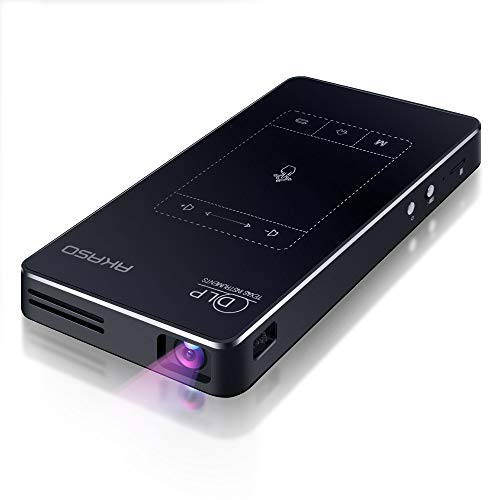 AKASO WT50 Mini Projector with WiFi and Bluetooth |
8.1/10 | Buy |
 Mini Projector, Portable Projector 1080P 4K |
8.0/10 | Buy | |
 YGSKK Mini Projector with Wifi and Bluetooth |
8.0/10 | Buy |
How Phone Projection Actually Works
A phone-based projector setup has three separate parts: the phone supplies the content, the connection carries the signal, and the projector enlarges that signal onto a wall or screen. The phone does not create the projected light, focus the image, or correct the geometry. Those jobs belong to the projector and its optical or electronic controls. Treating the phone as a source rather than as a homemade projector makes the setup easier to troubleshoot.
The simplest arrangement uses a cable from the phone to a projector input that supports phone mirroring. Another arrangement uses wireless screen mirroring, where the phone and projector communicate over a compatible wireless feature. A projector with built-in apps may let you stream directly from the projector instead, which can avoid mirroring limitations for some services. The product descriptions supplied for these options show that connection methods vary widely, so the exact menu names and supported content can differ.
Choose Wired or Wireless Phone Mirroring
Wired mirroring is usually the clearer starting point when the projector specifically lists phone support through Type-C, USB, or an included data cable. It keeps the signal path simple and does not depend on the quality of a local wireless network. The phone may still need an adapter, and the cable must support video output rather than charging only. A projector listing that says USB connectivity alone does not automatically prove that every phone can mirror through that port.
Wireless mirroring is more convenient when the projector and phone support compatible standards, such as AirPlay, Miracast, DLNA, or a named manufacturer app. The phone and projector may need to be connected to the same network, and Android and iPhone steps can differ. Wireless mirroring can also be affected by protected content restrictions, app support, or network interruptions. If the goal is a stable presentation or a locally stored video, wired output may be easier to verify.
Use this quick connection decision before buying a cable or changing projector settings:
- Check whether the phone uses USB-C, Lightning, or another video-capable output.
- Confirm that the projector lists phone mirroring, not just a charging USB port.
- Use a compatible video adapter when the phone and projector connectors differ.
- Choose wireless mirroring only when both devices support a matching standard.
- Plan for an external streaming device when protected apps do not mirror.
Match the Phone Port to the Projector Input
Connector shape is only the first compatibility check. A USB-C phone may support charging and data but not video output, while another USB-C phone may send video through a suitable adapter. A Lightning phone generally needs an appropriate digital video adapter for a wired HDMI path. The projector also needs an input that accepts the resulting signal, such as HDMI or a manufacturer-listed phone mirroring connection.
Some supplied projectors specifically advertise Type-C phone mirroring, while others describe a USB connection for iOS devices or list HDMI, USB, and audio ports without promising identical behavior across phones. Those distinctions matter because a cable that fits physically may still fail to display an image. Read the projector’s current connection instructions and the phone manufacturer’s output requirements together. If the product description says an adapter is required for iPhone connection, treat that as a setup requirement rather than an optional accessory.
Phone cases can also prevent a plug from seating fully, especially with short or rigid adapters. Remove the case temporarily if the connector feels loose, but do not force a plug into the phone or projector. Keep the cable supported so its weight does not pull against a side port. A damaged cable, adapter, or port can create an intermittent picture that looks like a software problem.
Set Up a Wired Phone-to-Projector Connection
Start with the projector powered off or in standby if its instructions recommend connecting sources before switching inputs. Connect the phone adapter or data cable to the phone, connect the other end to the projector’s stated input, and then select that input from the projector menu. Unlock the phone if it requests permission or asks whether to trust the connected device. The exact sequence can vary, so the supplied manual should control if it differs from this general process.
A successful connection normally produces a prompt, a mirrored phone display, or a projector source screen. If the projector reports no signal, check the selected input before replacing anything. Then confirm that the adapter supports video, the cable is fully inserted, and the phone is allowed to output a display. Testing with a photo or locally stored video can help separate a connection problem from an app-specific restriction.
Some projector descriptions emphasize plug-and-play wired mirroring, while others list HDMI as the broader source connection. That means a phone may need to pass through a digital adapter rather than connect directly to the projector’s USB port. A USB flash drive connection is not the same as live phone mirroring. Keep those functions separate when reading a product page or troubleshooting a blank image.
Use Wireless Mirroring Without Losing the Signal
Wireless setup begins by enabling the projector’s listed mirroring feature and opening the matching screen-share control on the phone. On an iPhone, the relevant control may be Screen Mirroring, while Android phones can use a manufacturer-specific cast or wireless display command. The projector’s name should appear only if the devices can discover each other through a compatible method. Select the projector and approve any pairing request shown on either screen.
Network conditions matter more with wireless video than with a direct cable. A weak or congested connection can cause buffering, delayed controls, or a dropped mirror session. Place the phone and projector where their wireless signals are not unnecessarily blocked, and keep the projector connected to the network required by its instructions. If discovery fails, restart the mirroring function rather than repeatedly changing unrelated picture settings.
Wireless mirroring does not guarantee that every app will display its video. Copyright protection can block the image while allowing menus or photos to appear, creating a black playback window that may be mistaken for a projector fault. Some supplied projector descriptions specifically warn about restrictions on services such as Netflix or Hulu when mirrored wirelessly. In that situation, use a supported built-in app, a compatible streaming device, or another legally supported playback route.
Handle Streaming Apps and Protected Video
Phone mirroring works most predictably with personal photos, downloaded files, web pages, and apps that permit external display output. Streaming services can behave differently because their content protection rules may limit mirroring. A projector can show the phone’s home screen correctly and still refuse to show a protected movie. That behavior points to content compatibility, not necessarily a failed cable or defective projector.
Built-in projector apps offer another path, but app availability and account support can change. The supplied data identifies some models with built-in apps and others without them, so do not assume that an app store is included. A TV stick or set-top box connected through HDMI may be a more consistent source for services that do not mirror from a phone. Keep the phone available as a remote, hotspot, or casting controller only when the service supports that arrangement.
Position the Projector for a Clear Phone Image
Place the projector on a stable surface facing the wall or screen as directly as the room allows. A straight placement usually reduces the need for digital keystone correction, which can alter the projected image to compensate for an angle. Auto keystone, manual keystone, electric focus, and rotating stands appear in different combinations across the supplied products. These features can make placement easier, but they do not remove the need to keep vents clear and the projector stable.
Focus after the projector reaches its normal operating state, then adjust the image size by moving the unit or using a supported zoom control. Digital resizing can change the displayed area without changing the physical throw position, but the available range depends on the model. A large image may look less convincing if the room has light on the wall or the source resolution is limited. For outdoor viewing, wait for darker conditions and use a suitable flat surface rather than expecting a phone connection to compensate for ambient light.
A phone screen is small, so menus and text may become difficult to read after enlargement. Rotate the phone when the video or projector supports a wider orientation, and disable screen-lock behavior that interrupts playback. Keep notifications from appearing over personal content by using an appropriate focus or do-not-disturb setting. These changes improve the viewing session without modifying the projector or bypassing its safety controls.
Use these placement checks before starting a movie, game, or presentation:
- Place the lens at a stable height with the projected surface directly ahead.
- Keep cooling vents unobstructed and leave clearance specified by the manufacturer.
- Align the projector before relying on keystone correction or digital zoom.
- Focus on text or fine image detail after selecting the phone input.
- Reduce room light when the picture appears gray, dim, or washed out.
- Keep the phone close enough for cable or wireless controls to remain reliable.
Troubleshoot a Blank Screen or No Signal
A blank screen has several plausible causes, so change one variable at a time. Start by confirming that the projector is on the correct source input and that the phone is unlocked. Then inspect the cable, adapter, and connection permissions before checking the app itself. This order avoids treating a protected video or wrong input as an optical failure.
If a wired setup shows no image, test a locally stored photo or video and reseat each connector. A charging-only cable, unsupported adapter, or phone without video output can prevent mirroring even when the plugs fit. If the phone displays a trust or permission request, approve it only when the connected device is the intended projector. Replace a suspect cable with one whose video capability is clearly stated rather than relying on appearance.
If a wireless setup cannot find the projector, verify that the projector’s mirroring mode is active and that the phone is using the required network. Turn off an old cast session on another device and retry discovery from the phone’s display settings. A projector that lacks Wi-Fi cannot receive ordinary wireless screen mirroring, even if it has Bluetooth for audio. Bluetooth pairing alone should not be treated as a video connection.
If photos mirror but one streaming app does not, check that service’s supported casting method instead of repeatedly resetting the projector. If the entire image is present but distorted, correct placement and focus before changing the phone. If the image is cropped, inspect the phone orientation, aspect ratio, and projector display mode. For another source-connection example, this MacBook-to-HDMI setup guide can help explain how source selection and adapters affect the signal path.
Protect the Phone, Projector, and Viewing Area
Keep the projector on a firm, ventilated surface and follow the manufacturer’s placement instructions. Do not cover vents, open the housing, bypass thermal controls, or disable automatic cooling features. Lamp and high-output light sources can be hazardous to the eyes, so never stare into the lens or allow children to look into the beam. Follow the product’s safety guidance for the specific light source and allow the unit to cool as directed before moving it.
Power connections deserve the same care as video connections. Use the supplied or manufacturer-specified power equipment where required, keep cables away from walkways, and stop using a cable that shows damage. Do not attempt internal electrical repairs or improvise ceiling-mount hardware. Ceiling installation should follow the manufacturer’s weight and hardware guidance, with qualified help when the work involves structural or electrical changes.
Phone placement also affects safety and convenience. Keep the phone away from hot projector exhaust, liquids, and areas where people may step on the cable. A wireless connection can reduce trip hazards, while a wired connection may be preferable when stable video matters more than cable-free placement. Store adapters with the projector so the next setup does not depend on an unverified replacement.
Verify the Setup Before the Audience Arrives
Run the complete setup with the actual phone, projector, cable, adapter, and content source before the event. Check the image, audio, focus, orientation, and control method from the intended viewing position. A connection that works on a home screen may behave differently inside a streaming app. Early verification gives you time to switch to a supported source without moving the projector repeatedly.
Audio may come from the projector’s built-in speaker, a wired audio output, or a compatible Bluetooth device. Bluetooth on a projector may support audio accessories without supporting phone video, so confirm the function you need. Keep the phone charged if it supplies the content for the entire session, especially when using a wired adapter. A separate streaming source can reduce phone battery demand when the projector supports that connection.
The most dependable answer to how to make a projector with a phone is to match the phone’s video output with a projector’s explicitly listed input or mirroring method, then verify the content before viewing. Use wired mirroring for a straightforward signal when the required adapter is supported, or use compatible wireless casting when both devices and the content service allow it.
About the author
Most projector frustration is a setup problem: wrong throw distance, a bracket in the wrong spot, a cable that will not carry the signal. I write step by step guides for mounting, placement, connecting laptops, phones, and streaming sticks, and getting a straight, sharp picture. I like checklists and I try to say what to measure before you drill anything. My notes follow the site's review methods: research-based comparison, not lab testing.