How Much Is a Projector Screen? What Drives the Cost
Wondering how much is a projector screen? See what pushes screen cost up or down, from size and material to stands and mounts, in October 2026.
 By Priya Raman
Updated

Projector screens run from simple foldable cloth to motorized ceiling units, and the cost gap between them is wide. A small portable screen for backyard movies and a large motorized one for a dedicated theater solve different problems. The useful question is what each extra dollar buys, not just what the lowest number is.
To answer how much is a projector screen, it helps to break the cost into the things that actually drive it: screen size, material and gain, how it mounts or stands, and whether it folds, rolls, or motors. This guide explains each factor and uses the foldable and stand-based screens listed below as examples of the lower-cost end. It leaves out exact figures, since prices on product pages change, and focuses on how to judge value. The goal is to help you pay for the features your room truly uses and skip the ones it does not.
| Award | Product | Best Projector Reviews Score About Best Projector Reviews ScoreBest Projector Reviews Score is a comparison aid based on available product information, not a hands-on testing result. Read our review methods. | |
|---|---|---|---|
| Best Overall |
 Mdbebbron 100 inch Projector Screen 16:9 Foldable |
9.2/10 | Buy |
| Best Value |
 150inch Outdoor Projector Screen Anti Crease |
9.2/10 | Buy |
| Best Budget |
 Mdbebbron 120 inch Projector Screen 16:9 Foldable |
8.3/10 | Buy |
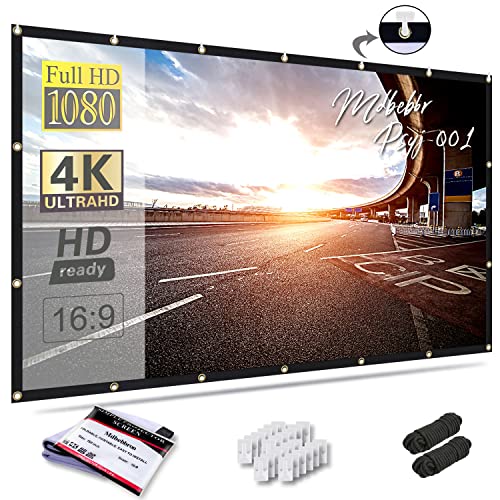 Mdbebbron 150 inch Projection Screen 16:9 Foldable |
8.1/10 | Buy | |
| Best Premium |
 IOLIEO 100 Inch Projector Screen with Black |
8.1/10 | Buy |
 120inch Projector Screen with Stand |
8.0/10 | Buy |
What Pushes a Projector Screen’s Cost Up or Down
Screen cost follows a few predictable rules. Bigger screens cost more, built-in mechanisms cost more, and specialty surfaces cost more. Portable fabric designs sit at the lower end of the range.
Screen Type: Fabric, Frame, Pull-Down, and Motorized
The simplest screens are folding cloth sheets that you hang with hooks or ties. They pack small, they are easy to carry, and they sit in the lower-cost tier. Many of the products in this guide are of that type.
Fixed-frame screens stretch the material across a rigid frame, which keeps it flat and gives a clean edge. Pull-down screens retract into a case and are mounted on a wall or ceiling. Motorized versions add a motor and a remote, and they sit at the premium end because of the added mechanics.
The right type depends on how you use the room. A living room that doubles as a family space may suit a pull-down screen that disappears, while a backyard needs something portable. Decide on the type first, since it sets the price tier more than any other factor.
Size Is the Biggest Price Lever
A larger screen uses more material and more structure, so the cost rises with diagonal size. The listings here include 100, 120, and 150 inch options in a 16:9 shape. The listings also give viewing area dimensions, such as 87 by 49 inches for a 100 inch Mdbebbron screen and 130 by 73 inches for a 150 inch model.
Bigger is not automatically better. A larger picture needs a projector with enough brightness and the right throw distance, and it needs wall or yard space. A screen that is too big for your projector will look dim, which is a common source of buyer’s remorse.
Choose a size based on seating distance and room dimensions. Measure the wall or the space where the screen will go. Then pick the largest size your projector can light well, not the largest that fits.
Material, Gain, and Backing
Most budget screens are white polyester fabric. The Mdbebbron listings describe an anti-crease polyester material that supports front and rear projection with a 160 degree viewing angle. The AAJK listing describes a soft-touch white fabric that is washable, and the ZUVMITG listing describes a washable milk silk fabric.
The IOLIEO screen adds a black backing layer. Its listing says the backing blocks light bleed and improves contrast, though that is a manufacturer claim and the effect depends on the room and projector. Backing can matter more when the screen hangs where light might pass through.
Higher-end screens use engineered surfaces with specified gain ratings and ambient light designs. These cost more and suit specific rooms, such as bright living spaces. For casual viewing in a dark room, a basic white fabric may be enough.
Stands, Mounts, and Extras
A screen with a stand costs more than a hang-it-yourself cloth because it includes the frame. The ZUVMITG listing describes a 120 inch screen with a stand, a carry bag, and a windproof kit of stakes, ropes, and sandbags. That makes it suited to outdoor use but adds to its cost over a plain cloth.
Cloth screens often rely on hooks, nails, ropes, or tape. The Mdbebbron and AAJK listings mention fastening with hooks, brackets, nails, or double-sided tape. Those methods cost little, but the surface may not be as taut as a framed screen.
Think about what you need to buy beyond the screen. Mounts, brackets, a frame, sandbags, or a carrying bag all add up. Include them in your budget from the start.
Portable Screens for Backyard Movie Nights
Outdoor screens are often foldable or stand-mounted, and wind is the main enemy. A cloth screen hung loosely will flap, so securing the edges matters. The ZUVMITG listing includes stakes, ropes, and sandbags for that reason.
Washable fabric is useful outdoors, where dirt and bugs find their way onto the surface. The AAJK and Mdbebbron listings describe washable materials, and they suggest hand washing or machine washing. Follow the maker’s care instructions before cleaning.
Outdoor viewing also depends on darkness. A screen can only do so much in a bright yard. Wait until dusk, and keep nearby lights off.
Double-Sided Projection and Other Features
Some listings support rear projection as well as front. That lets you place the projector behind the screen, out of the walking path. It needs space behind the screen, and the material has to let light through properly.
Features like 16:9 shape matter for matching modern video. A screen with the wrong shape leaves black bars or wasted space. Match the screen’s shape to your projector’s native format.
Resolution claims for screens, such as 4K or 1080p, describe the surface’s suitability and not its pixels. A screen does not have resolution the way a projector does. Treat those labels as marketing shorthand, not a measurement.
How the Listed Screens Compare
The Mdbebbron 100 inch Projector Screen 16:9 Foldable, the Mdbebbron 120 inch Projector Screen 16:9 Foldable, and the Mdbebbron 150 inch Projection Screen 16:9 Foldable share the same material description, so size is the main difference between them. Their listings give viewing areas of 87 by 49, 104 by 58, and 130 by 73 inches. If you like that material, the size you choose is mostly a function of your room and projector.
The 150inch Outdoor Projector Screen Anti Crease from AAJK is described as a 150 inch, 16:9 screen with a 132 by 73 inch viewing area and a 160 degree wide viewing angle. Its listing focuses on outdoor movie nights, gatherings, and portability. It has a similar profile to the large Mdbebbron option, so compare the material notes and what each listing says is included.
The IOLIEO 100 Inch Projector Screen with Black stands apart because of its black backing layer and the claim of straighter borders. Its listing describes a 100 inch size with an 87 by 48 inch viewing area. The 120inch Projector Screen with Stand is the only one here with a frame and windproof kit, which is why it belongs in a different cost tier from the cloth-only options.
Matching Screen Size to Projector Brightness and Distance
A screen only works as well as the projector feeding it. A large screen spreads the light over more area, so the picture looks dimmer, and a bright room makes that worse. Check your projector’s stated ANSI lumen rating and its recommended screen size range before choosing a size.
Throw distance matters, too. That is how far the projector sits from the screen to fill it, and the manual lists the range for each zoom setting. A 150 inch screen needs more room than a 100 inch one, so measure the space before you buy.
If you are not sure, go one size smaller. A slightly smaller picture that looks bright and sharp beats a huge one that looks washed out. You can always move up later.
Care, Wrinkles, and Storage
Foldable screens can show creases after storage. Several listings describe anti-crease fabric, but results vary, so hanging the screen flat for a while before use can help. Some owners steam or iron fabric on a low setting, though you should check the manufacturer’s instructions first.
Cleaning is easier with washable material. Follow the care notes on the listing, and let the screen air dry fully before folding. Storing it damp invites mildew.
Framed and pull-down screens need different care. Keep the surface free of dust, avoid touching it with oily hands, and retract it gently. Good care extends the useful life and protects your investment.
Hidden Costs to Plan For
Beyond the screen, you might need hooks, brackets, a frame, or a stand. Outdoor setups benefit from stakes, ropes, and sandbags, which some listings include. These extras can change the total cost more than you expect.
Think about the projector, too. A weak projector may not light a big screen, and an upgrade is far more costly than a screen. Budget for the system, not just the screen.
Return policies and seller support add value. A listing that mentions help with installation or replacement can reduce risk. Read those details before ordering.
Is a Screen Worth It Over a Blank Wall?
A smooth, light-colored wall can work well and costs nothing. A screen makes sense when the wall is textured, tinted, or marked with outlets and art. It also helps when you want the picture to be crisp at the edges.
A screen gives you a defined, flat surface. That tends to improve evenness and edge sharpness. In a bright room, a screen designed for ambient light may help more.
If your wall is smooth and neutral, start there. Upgrade to a screen if the image disappoints. That approach keeps the spend tied to a real problem.
How to Decide What to Spend
Start with your use. A backyard needs portability and wind control, a bedroom needs a modest size, and a theater room may justify a fixed or motorized screen. Matching the screen to the job prevents overspending.
Then match it to the projector. A dim projector needs a smaller screen or a better surface, and a bright one can handle more size. Check the projector’s throw distance, too, since the screen must fit the space.
Finally, read the listing carefully. Look at the stated size, the material, and what’s included. Compare current prices on the product pages, since the numbers change, and weigh them against the features you really need.
About the author
A good screen can change a picture more than a small projector upgrade, and it is the part many buyers skip. I write about screen materials, gain, ambient light rejecting designs, and how room lighting, wall color, and seating position change what you see. I try to keep the advice grounded in what a normal room looks like, not an ideal one. My notes follow the site's review methods: research-based comparison, not lab testing.